Fasteners
Backed-Out Screws and Dry Washers
Daily heating and cooling works screws loose along each rib. Once the rubber washer dries and cracks, water follows the shank inside, so every screw is tightened, swapped, or sealed.

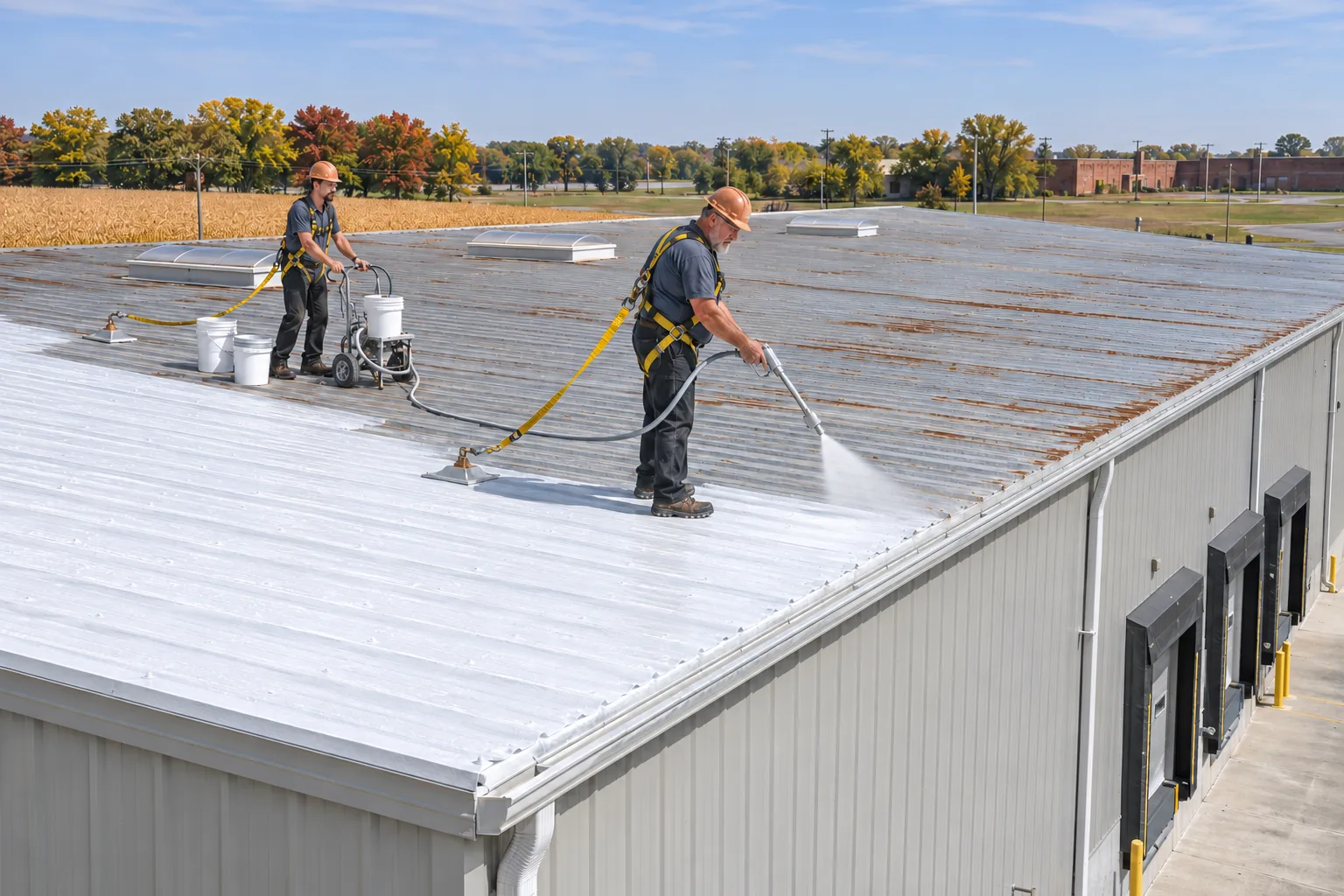
As an Anderson metal roof coating contractor, we wash, prime, and seal metal roofs on warehouses, plants, and shops, then coat them without a tear-off.
Anderson metal roof coating works best on steel that still holds a screw. Match what you see on your roof to the closest row below.
| What You See On The Roof | Coat It | Repair, Then Coat | Replace First |
|---|---|---|---|
| Chalky paint and light surface rust on firm panels | Usually Fits | Sometimes | Rarely |
| Loose or backed-out screws along the ribs | Usually Fits | Usually Fits | Rarely |
| Side laps that drip during hard, windy rain | Sometimes | Usually Fits | Rarely |
| Pinholes or rust-through near gutters and eaves | Rarely | Usually Fits | Sometimes |
| Soft, sagging panels or bent purlins underneath | Rarely | Sometimes | Usually Fits |
Treat the dots as a starting point. The inspection decides each section, and one roof can land in all three columns.
These are the conditions we find most on Anderson warehouses, plants, and farm shops, and what each one means for the coating plan.
Daily heating and cooling works screws loose along each rib. Once the rubber washer dries and cracks, water follows the shank inside, so every screw is tightened, swapped, or sealed.
Panel laps lose their sealant first on long runs. Dripping that starts only in wind-driven rain usually traces to a lap, and we bridge each one with fabric or seam sealer.
Orange streaks below screw heads and along gutters show where the factory finish has worn through. Light rust is scaled and primed; holes rusted through get a new panel.
Bent panels and clogged gutters let water sit after storms. Standing water wears a coating faster, so low spots are cleared and checked, and silicone goes where water still collects.
Meltwater that refreezes at the eaves can back up under laps and around screws. Sealing those details before coating closes the paths ice pushes water through.
Shallow hail dents rarely stop a coating from bonding. Split seams, cracked panels, and loose fasteners are repaired first, and open claims get photos before work starts.
Each system has its own page with prep steps, limits, and costs. Roof condition decides which one fits, and some roofs use two.
Our main service for exposed-fastener and standing-seam steel. Panels are washed, rust is primed, screws and laps are sealed, then the full field is coated to a specified mil thickness.
Silicone holds up where water sits for a day or two after rain, which makes it the pick for low-slope sections, valleys, and gutters that drain slowly.
A water-based coating for sloped panels that shed water fast. It rolls cleanly around details and goes on during warm, dry stretches from late spring into early fall.
Foam sprayed over cleaned panels fills the ribs, covers every screw, and adds insulation, then gets a protective coating on top. It also builds up low areas so water moves off.
For commercial asphalt shingle roofs that still lie flat but are shedding granules. Loose tabs are secured, flashing is sealed, and a coating made for shingles goes over the field.
A drip over racking or a fresh ceiling stain after rain needs a look before it spreads. Call and tell us where the water shows up.
Call UsBudgeting a coating for next season? Start with a free ballpark range for your roof size, then we inspect and price each section.
Get A Free Ballpark EstimateFive stages, each on its own tab. The order stays the same on every Anderson roof; the time each stage takes depends on that roof.
We walk every section and photograph screws, laps, gutters, and curbs, and look at the panels from below where we can. You get a written list of repairs before any coating is priced.
On The RoofLoose screws are tightened or upsized, dried washers are replaced, and rusted-through panels are cut out or swapped. Open laps get fabric and seam sealer so the coating has a tight base.
RepairsPanels are pressure-washed to remove chalk and dirt, loose scale is brushed off, and bare steel gets a rust-inhibiting primer. A coating holds only as well as the surface under it.
Surface PrepThe base and top coats go on by spray or roller, measured in mils as we go. Curbs, skylights, and gutters get extra build before the open field is finished.
CoatingA final walk checks coverage, thickness readings, and every detail. Gutters are cleared, debris leaves with us, and you get photos of the finished sections for your records.
Close-OutCoating keeps the steel you already own on the building. Here is what changes once the roof is sealed and coated.
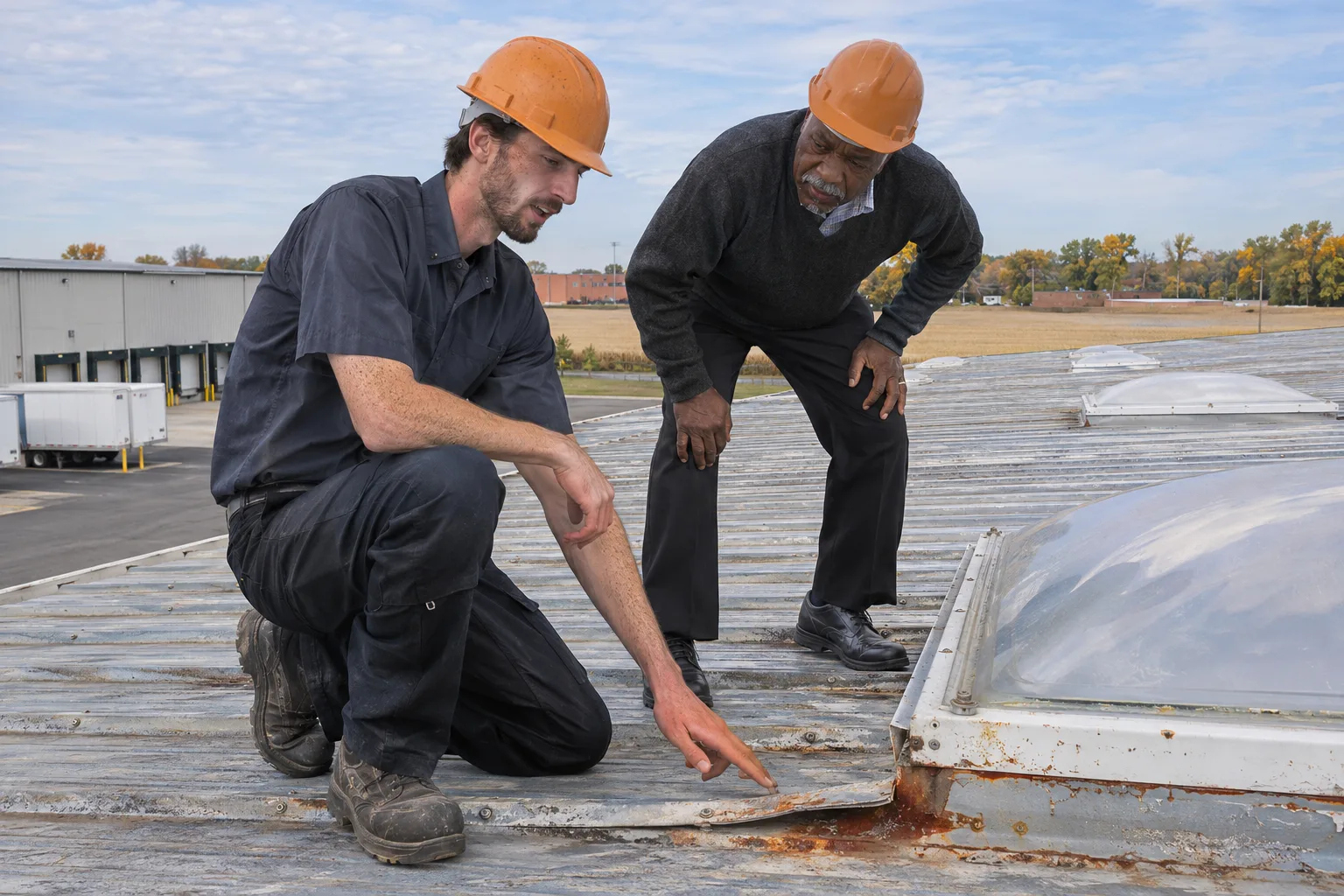
Work happens on the roof surface, so docks, offices, and production lines keep running while each section is coated.
Skipping the tear-off keeps dumpsters off the lot and the building closed in from weather for the whole job.
White and light coatings reflect more sunlight than weathered steel, so the panels and the space under them run cooler on hot afternoons.
When the coating wears, the roof is washed and recoated, which keeps the next round of work at the coating layer.
Fastener heads are the first leak points on steel roofs. Sealing each one during prep closes off the most common source of drips.
We take metal roof coating work in Anderson and five towns nearby. Outside them? Call us or send us a message.
Shops, warehouses, and farm buildings in Elwood often carry several rounds of old patches.
We test how the coating bonds to those layers before the whole roof is coated.
Elwood metal roof coatingProperties in Pendleton with two or three metal buildings on one lot are coated one building at a time.
Each building gets its own inspection notes and schedule.
Pendleton metal roof coatingIndustrial roofs in Hartford City carry vents, stacks, and exhaust curbs that need flashing work before coating.
Rusted-through panels around them are replaced first.
Hartford City metal roof coatingOwners in Alexandria often start with a list of past leaks and old repairs.
That history guides the roof walk and shows where the coating plan begins.
Alexandria metal roof coatingGutters and eaves shape much of the plan on Fortville shops and storage buildings.
Slow-draining areas get silicone, and well-drained slopes get acrylic.
Fortville metal roof coating
It turns a worn metal roof into one sealed surface. Before coating, we wash the panels, prime rust, and seal each screw and lap; then the coating goes on in measured coats. Your building keeps its existing panels, and the work stays up top while the space below stays in use.
Often, as long as the steel is still firm. Pole barns and farm shops near Anderson usually leak at exposed screws and lap seams, and coating seals both. We check purlins for sag, look for rust-through, and ask about drips on cold mornings, since condensation from inside is a ventilation issue that coating leaves alone.
Plan a recoat once the old coating chalks heavily, wears thin enough to show primer or bare steel, or starts to crack at screws and laps. Catching it then keeps the old layer in place: we wash it, run a compatibility check, and add a fresh top coat instead of starting over.
Coating runs about $2.50 to $4.00 per square foot in our published range, while replacement runs about $5 to $8. Your number is set after the inspection. Rust repair, fastener work, lap reinforcement, roof height, the coating chosen, and how many curbs and skylights the roof carries all push it up or down.
Sections are scheduled around the docks. We stage at one end of the roof, coat that section, and move along so trucks, racking, and forklifts keep working below. Skylights, curbs, and gutters take the most detail time, while open runs of panel between them go quickly.
Steel grows in afternoon sun and shrinks overnight, and that movement works screws loose and cracks old sealant at laps. Meltwater gets into those gaps and refreezes. Sealing every fastener and lap before coating, and using a coating that stays flexible in the cold, helps the roof ride through Indiana winters.
That depends on the scope. The City of Anderson's Municipal Development department runs the Permit Center and can say whether your project needs approval. Jobs that also replace panels, add foam, or change the structure are the likeliest to need it. Commercial buildings in Indiana follow the Indiana Building Code under 675 IAC 13.
Send the roof size for a ballpark range, or call to set up a roof walk on your building.


